
Every single day, the average Indian spends more than 7 hours staring at a screen. Your phone. Your laptop. Even that smart TV in the living room. Now think about this — every ad you see, every Instagram reel from boAt, every Zomato notification at 9 PM offering 60% off? That is digital marketing working on you in real time.
So if you have been wondering what is digital marketing and why everyone from your college senior to your chaiwala's son is talking about it, you are at the right place. This guide is written for complete beginners — no fancy words, no confusing theory.
In this guide, you will learn exactly:
- What digital marketing really means in simple words
- The 8 main types of digital marketing with real Indian brand examples
- How it works step by step through a real story
- Career and salary opportunities in 2026
- A clear 5-step action plan to start today
📑 What You Will Learn
- What Is Digital Marketing? — Simple Definition
- Why Digital Marketing Matters in 2026
- 8 Types of Digital Marketing Explained Simply
- How Digital Marketing Actually Works — Step by Step
- Digital Marketing vs Traditional Marketing
- Is Digital Marketing a Good Career in 2026?
- How to Learn Digital Marketing — 3 Paths
- How to Get Started Today — Action Plan
- Frequently Asked Questions
What Is Digital Marketing? — Simple Definition
Digital marketing is the promotion of products, services, or brands using the internet and digital devices. It covers everything businesses do online to reach customers — including search engines (Google, Bing), social media (Instagram, Facebook, LinkedIn), email, websites, mobile apps, and voice assistants like Alexa.
Think about it this way. Imagine your uncle runs a small sweet shop in Jaipur. Earlier, he would print pamphlets and paste posters on walls to get customers. Today, he posts photos of fresh ghewar on Instagram, runs a small Facebook ad, and suddenly customers from across the city come to his shop.
That shift — from posters to pixels — is the heart of what digital marketing really is.
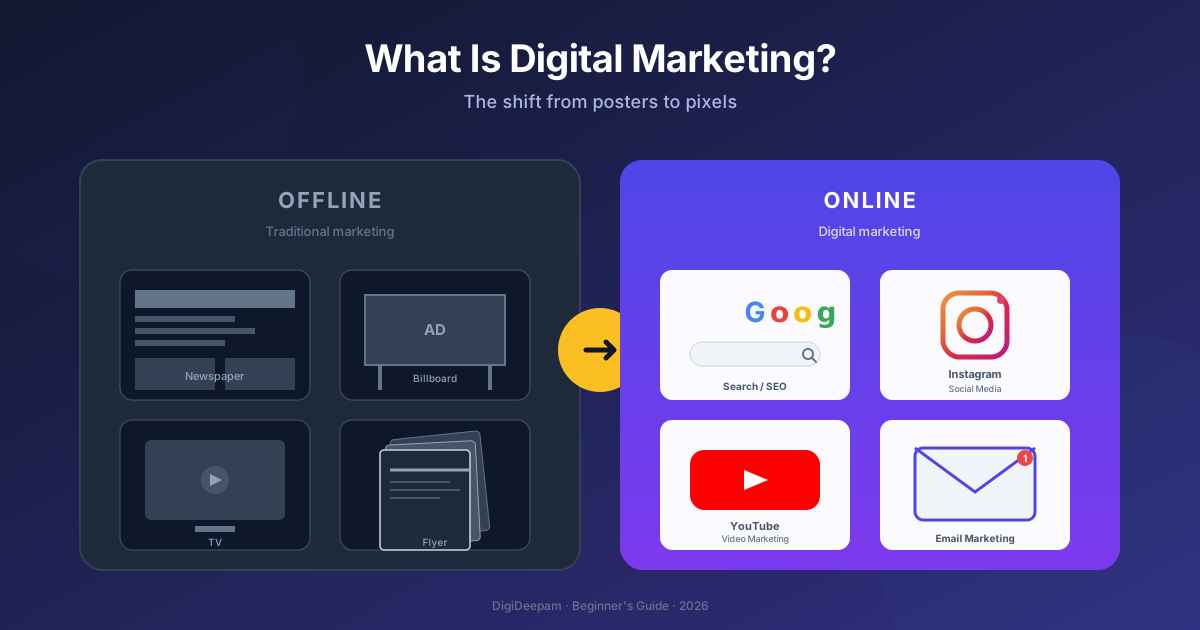
Key Definition: Digital marketing = marketing activities delivered through digital channels, measured with digital data, and optimized using digital tools.
So when someone asks what is digital marketing, the simplest answer is this — it is any marketing that happens through a digital channel, from a Google search result to a WhatsApp broadcast message.
Why Digital Marketing Matters in 2026
Digital marketing matters in 2026 because over 900 million Indians are now online, making it the world's second-largest internet market after China. Traditional advertising can no longer reach this massive digital-first audience effectively or affordably.
Here are 4 key statistics every beginner should know:
- India has over 900 million internet users in 2026, according to the Internet and Mobile Association of India (IAMAI).
- The average Indian spends 7+ hours per day on digital devices.
- India's digital advertising market crossed ₹46,000 crore in 2025 and is projected to grow 20%+ annually.
- Over 76% of Indian shoppers research products online before buying, even for in-store purchases.
Traditional marketing — newspaper ads, TV commercials, hoardings — still works. But it is expensive, slow, and you cannot measure results properly. You have no idea how many people actually saw your hoarding on the highway.
Digital marketing flips this completely. You can spend just ₹500 on a Facebook ad, reach 10,000 people, and track every single click. That is why small businesses, startups, and even kirana stores are going online.
Now here's the interesting part for global readers. Since you are searching in English, you can work with clients from the US, UK, Dubai, or Australia while sitting in Lagos, Manila, Dhaka, or Mumbai. The internet removed the border. [Statista — Global Digital Ad Spend Report 2026]
8 Types of Digital Marketing Explained Simply
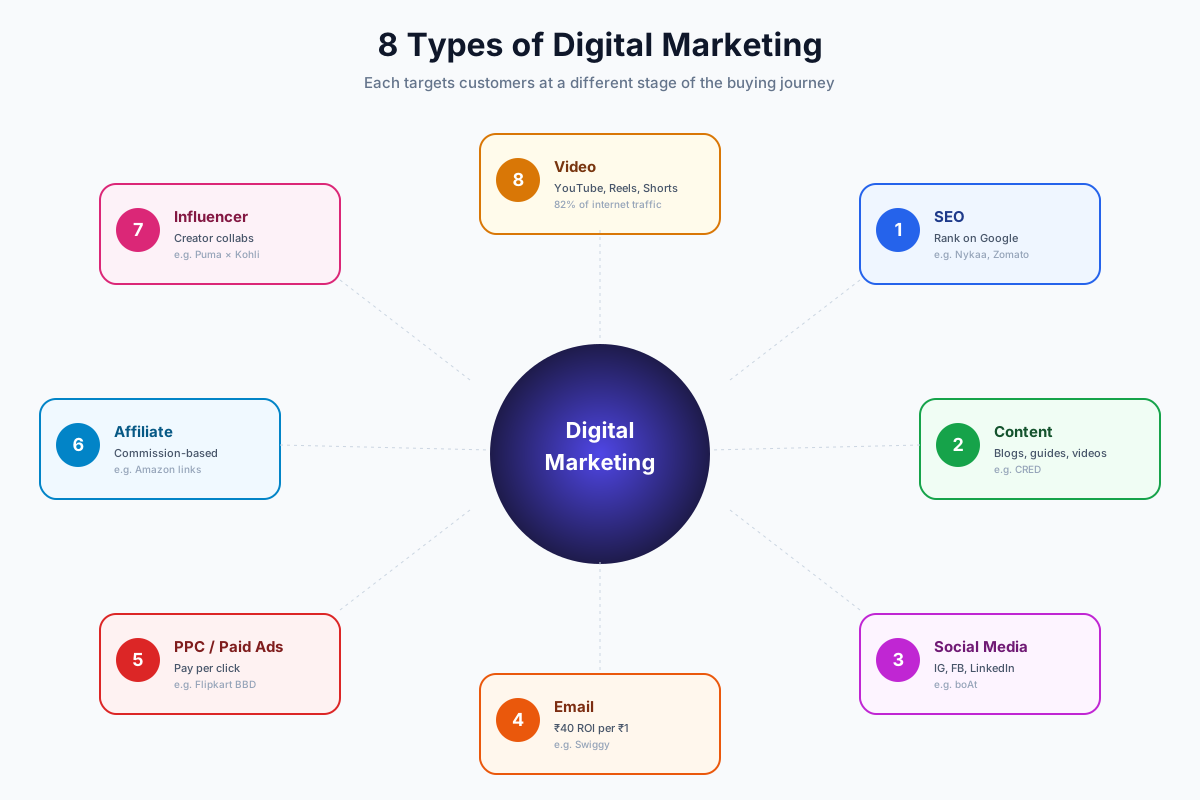
The 8 main types of digital marketing are: SEO, content marketing, social media marketing, email marketing, PPC/paid ads, affiliate marketing, influencer marketing, and video marketing. Each type targets customers at a different stage of their buying journey.
Let me break down each one so you actually remember them. This is the section most beginners get confused about — but it is much simpler than you think.
1. Search Engine Optimization (SEO)
SEO is the skill of making your website show up on the first page of Google. When you search "best biryani in Hyderabad," the first 3-4 results you see got there because of SEO. Example: Nykaa ranks on top for thousands of beauty-related searches — pure SEO at work.
2. Content Marketing
Content marketing means creating helpful blogs, videos, or guides that attract customers naturally. Instead of shouting "buy my product," you share value. Example: CRED does this brilliantly — their witty ads and blogs educate users about credit scores while quietly building trust.
3. Social Media Marketing
This is promoting your brand on Instagram, Facebook, LinkedIn, X, and YouTube. Example: boAt became a ₹4,000+ crore company mainly through smart Instagram marketing and influencer collaborations. They turned earphones into a fashion statement.
4. Email Marketing
Email marketing is sending targeted emails to customers who have shown interest in your brand. Example: Swiggy emails remind you about your favorite restaurant with a 50% off code. Email has the highest ROI of any channel — around ₹40 return for every ₹1 spent, according to the Data & Marketing Association.
5. Pay-Per-Click (PPC) / Paid Ads
PPC means you pay platforms like Google or Meta to show your ads, and you are charged only when someone clicks. Example: Flipkart, Amazon India, and Myntra spend crores on PPC during festive sales like the Big Billion Days.
6. Affiliate Marketing
Affiliate marketing is when you promote someone else's product and earn commission on each sale. Example: Many Indian YouTubers earn ₹1–5 lakh every month by sharing Amazon affiliate links in video descriptions.
7. Influencer Marketing
Brands pay creators to promote products to their followers. Example: When Virat Kohli wears a Puma jersey on Instagram, that is influencer marketing at the highest level. Even nano-creators with 10,000 followers now earn from brand deals.
8. Video Marketing
Video marketing uses YouTube, Instagram Reels, and YouTube Shorts to reach audiences. Example: Zomato's funny food videos get millions of views and drive app downloads daily. By 2026, video accounts for over 82% of all internet traffic globally.
How Digital Marketing Actually Works — Step by Step
Digital marketing works by guiding a customer through 4 stages: Awareness → Interest → Decision → Action. Different digital channels appear at each stage to move the customer closer to buying.
Let me explain this with a real story. Meet Priya, a 22-year-old college student in Pune who wants to buy headphones under ₹2,000.
Stage 1: Awareness. Priya opens Google and types "best headphones under 2000." She sees articles, YouTube reviews, and ads from boAt, Noise, and OnePlus. This is where SEO, PPC ads, and content marketing do their job — they make brands visible at the right moment.
Stage 2: Interest. Priya clicks on a YouTube review, then visits boAt's website. Immediately, boAt's pixel starts tracking her. Now boAt ads start following her on Instagram and Facebook — that is called retargeting.
Stage 3: Decision. Priya gets an email from boAt with a 15% discount code. She also sees an Instagram reel from her favorite tech influencer praising the same model. Trust builds. She is almost ready to buy.
Stage 4: Action. Priya finally clicks the "Buy Now" button and orders the headphones. After delivery, boAt sends her a WhatsApp message asking for a review and offering 10% off on her next order. She becomes a repeat customer — this is retention marketing.
And just like that — search, social, email, influencer, ads — every piece of digital marketing worked together to turn a curious student into a loyal customer. Once you see this pattern, you will notice it everywhere.
Digital Marketing vs Traditional Marketing
Digital marketing beats traditional marketing on cost, targeting, measurability, and speed, while traditional marketing still offers wider local trust and mass reach through TV and print. Here is a clear side-by-side comparison:
| Feature | Traditional Marketing | Digital Marketing |
|---|---|---|
| Starting Cost | ₹50,000+ for one newspaper ad | Start from just ₹100 on Facebook |
| Reach | Limited to one city or region | Global, 24/7 |
| Targeting | Shows to everyone | Target by age, city, interest, income |
| Measurement | Almost impossible to track | Every click, view, sale tracked |
| Speed | Takes days or weeks to launch | Goes live in minutes |
| Flexibility | Cannot change once printed | Edit or pause any time |
| ROI Tracking | Estimated | Exact rupee-per-rupee data |
Think about a small boutique in Jaipur. Spending ₹30,000 on a newspaper ad might get 10 walk-ins. But the same ₹30,000 on Instagram ads can reach 50,000 local women aged 20-40, bring 500 website visits, and generate 50 actual orders.
For small businesses in India, digital marketing wins every single time — it is cheaper, faster, and much easier to measure. That is why even traditional brands like Tanishq and Fabindia now spend more on digital than on TV.
DigiDeepam's Complete Digital Marketing Course covers everything — SEO, social media, paid ads, content, and more — with live support.
Enroll Now and Get 30% Off This Week →
Is Digital Marketing a Good Career in 2026?
Yes, digital marketing is one of the best career options in India in 2026, with over 2 lakh new jobs opening every year and remote work opportunities across the globe. Entry-level professionals earn ₹2.5–4.5 LPA, while senior roles pay ₹12–25 LPA or more.
Here are the salary ranges in India for 2026:
| Experience Level | Salary Range (Annual) |
|---|---|
| Fresher (0–1 year) | ₹2.5 – ₹4.5 LPA |
| Mid-level (2–4 years) | ₹5 – ₹9 LPA |
| Senior (5+ years) | ₹12 – ₹25 LPA |
| Head of Marketing / CMO | ₹30 LPA and above |
The top 5 job roles you can target as a beginner include:
- SEO Executive — optimize websites to rank on Google
- Social Media Manager — run brand pages on Instagram and LinkedIn
- PPC Specialist — manage paid ads on Google Ads and Meta Ads
- Content Writer — create blogs, emails, and ad copy
- Digital Marketing Manager — lead full campaigns and teams
But here is the real magic — you are not limited to Indian companies. With solid skills, you can work remotely for US, UK, or Dubai-based companies and earn in dollars or dirhams. Platforms like Upwork and Fiverr are full of Indian freelancers earning ₹80,000 to ₹3 lakh per month from home.
So if you are that student panicking about the job market, take a deep breath. Digital marketing is one of the very few fields where your skills matter more than your college name.
How to Learn Digital Marketing — 3 Paths
You can learn digital marketing through 3 main paths: self-learning using free resources, a structured online course, or a hands-on agency internship. Each has clear pros and cons, and the best path depends on your time, budget, and learning style.
Path 1: Self-Learning (Free YouTube + Blogs)
You can learn almost everything from free YouTube channels, blogs, and platforms like Google Digital Garage and HubSpot Academy.
✅ Pros: Zero cost, flexible timing, huge content library available.
❌ Cons: No structured path, no mentor to correct mistakes, zero certificate, and most beginners give up within 2 months due to information overload.
Path 2: Online Course (Structured Learning)
A good online course gives you a clear roadmap, live doubt sessions, live projects, and a recognized certificate. You finish in 3–6 months instead of struggling for 2 years.
✅ Pros: Structured path, mentor support, real projects, certificate, job placement help.
❌ Cons: Costs money upfront (though much cheaper than an MBA). Quality depends on the institute you choose.
Path 3: Agency Internship
Joining a small digital agency as an intern gives you real client experience fast. You see how actual campaigns run for actual money.
✅ Pros: Hands-on work, learn from seniors, build a portfolio quickly.
❌ Cons: Low stipend (₹5,000–₹15,000), unstructured learning, long hours without guidance.
For most Indian students and working professionals, Path 2 combined with a bit of Path 3 works best. A focused course like the DigiDeepam Complete Digital Marketing Course teaches you everything with live mentorship, so you do not waste 2 years figuring out where to start.
How to Get Started Today — 5-Step Action Plan
Here is a simple 5-step action plan any beginner can start today, with zero prior experience and zero investment:
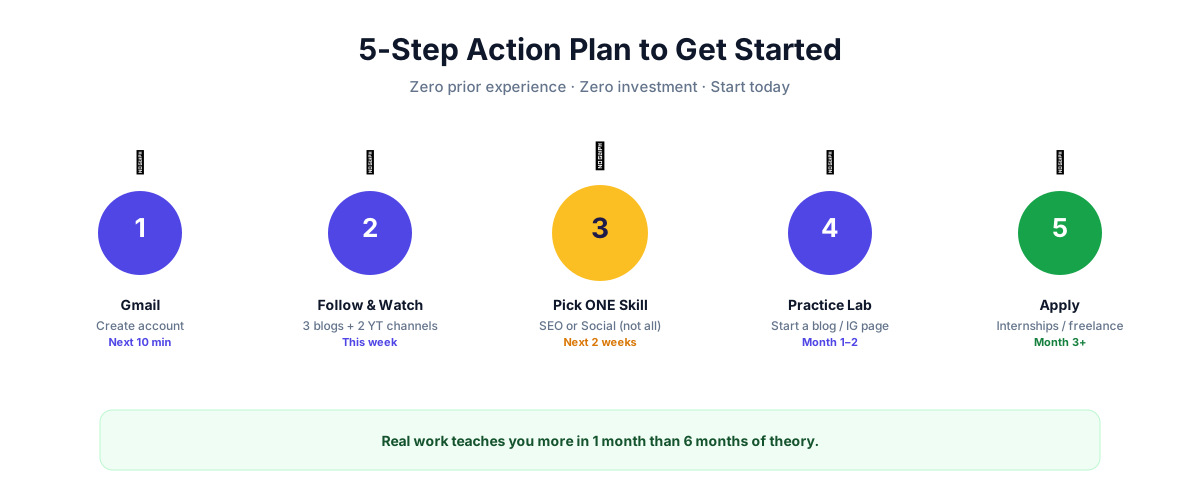
- Step 1 (Next 10 minutes): Create a free Gmail account specifically for your digital marketing journey. Use this for Google Analytics, Search Console, and all learning tools.
- Step 2 (This week): Follow 3 trusted digital marketing blogs and 2 YouTube channels. Read and watch for 30 minutes daily. Focus on absorbing, not implementing yet.
- Step 3 (Next 2 weeks): Pick ONE skill first — SEO or social media marketing. Do not try to learn everything at once. That is the biggest mistake 90% of beginners make.
- Step 4 (Month 1–2): Start your own blog or Instagram page on any topic you enjoy — food, fashion, fitness, travel. This is your live lab to practice everything you learn.
- Step 5 (Month 3 onwards): Apply for internships or freelance gigs on LinkedIn and Internshala. Real work teaches you more in 1 month than 6 months of theory.
That is it. Simple, doable, and designed for real beginners with zero background. Google Digital Garage — Free Certified Courses
Frequently Asked Questions
See the FAQ section below — these also appear as FAQPage schema for Google rich results and AI answer engines.
Key Takeaways
- Digital marketing is promotion through digital channels — Google, social media, email, video, and more.
- India has 900+ million internet users in 2026 — the world's second-largest online market.
- 8 main types — SEO, content, social, email, PPC, affiliate, influencer, and video marketing.
- Entry-level salary: ₹2.5–4.5 LPA — with growth up to ₹25+ LPA and remote global opportunities.
- Best learning path: structured online course + hands-on practice on your own blog or page.
Final Thoughts
So there you have it — a complete beginner's answer to what is digital marketing without any confusing jargon.
Let's quickly recap the three most important things you learned today. First, digital marketing is simply promoting brands through digital channels like Google, Instagram, and email — nothing scary about it. Second, it has 8 main types, and you only need to master 2–3 to build a strong career or business. Third, it is one of the most rewarding career paths in 2026 with massive opportunities for freshers, freelancers, and small business owners.
You do not need a fancy degree. You do not need lakhs of investment. You just need the right guidance and consistent practice.
Start Your Journey Today →